
Send Message
Privacy statement: Your privacy is very important to Us. Our company promises not to disclose your personal information to any external company with out your explicit permission.
 Zhaoqing Gangtie Technology Co., Ltd.
The window handle is the primary component users interact with daily, yet it often takes a backseat to profiles or glass during the specification process. At A-OK Hardware, we believe a well-engineered handle dictates the entire tactile experience of a window—defining its operational smoothness, security feel, and architectural integration.
Understanding the mechanics, types, and quality markers of window handles empowers you to make informed decisions for any commercial or residential project. Here is our expert breakdown.
A handle does far more than provide a simple grip. In modern fenestration, it is the control center for the entire locking mechanism. When you turn a casement or tilt-and-turn handle, you are engaging an internal gearbox. This gearbox drives the espagnolette—a perimeter linkage system that secures multiple lock points simultaneously. Therefore, the internal precision of the handle directly impacts the long-term reliability and acoustics of the window.
Conversely, on sliding windows, the handle integrates a latch or hook mechanism to secure the moving sash while providing the necessary leverage for smooth horizontal operation.
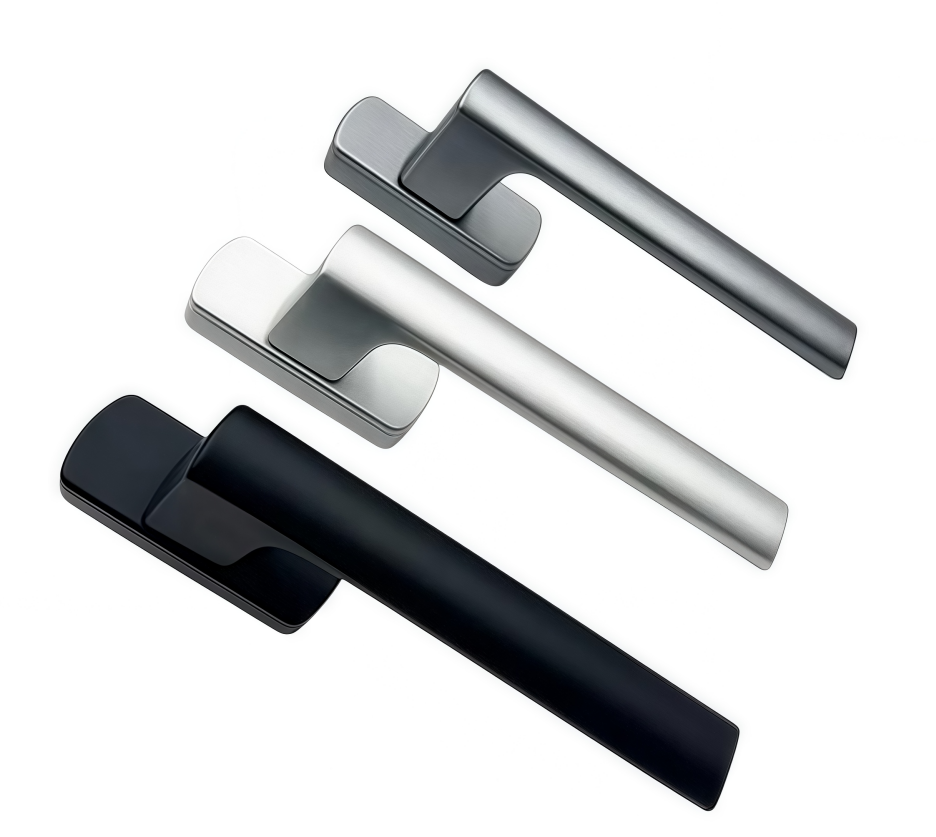
This is the global standard for inswing casements, tilt-and-turn, and outswing windows. The handle body rotates a solid central spindle (typically square or hexagonal), which interfaces directly with the window's internal gearbox. Designed for high torque and multi-point locking systems, the spindle drive offers maximum security and is the backbone of most European-style window systems.
For architects seeking ultimate minimalism, the baseless handle is the premier choice. It sits completely flush against the window sash, eliminating the traditional visible base plate (or rose). All fixing screws and rotary mechanisms are ingeniously concealed within the handle's core or the window profile itself, delivering an exceptionally clean and contemporary aesthetic.
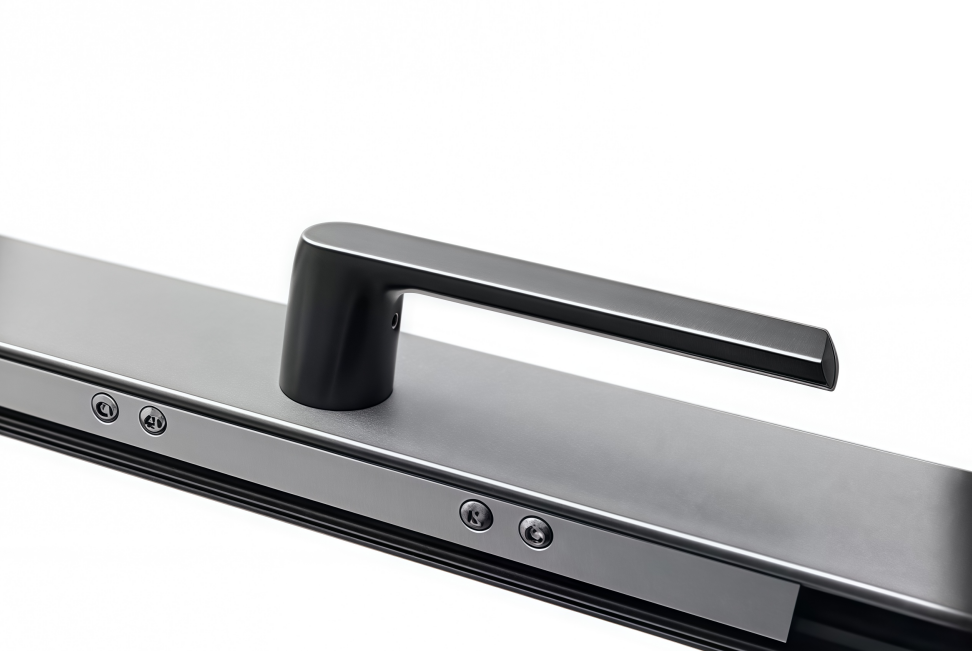
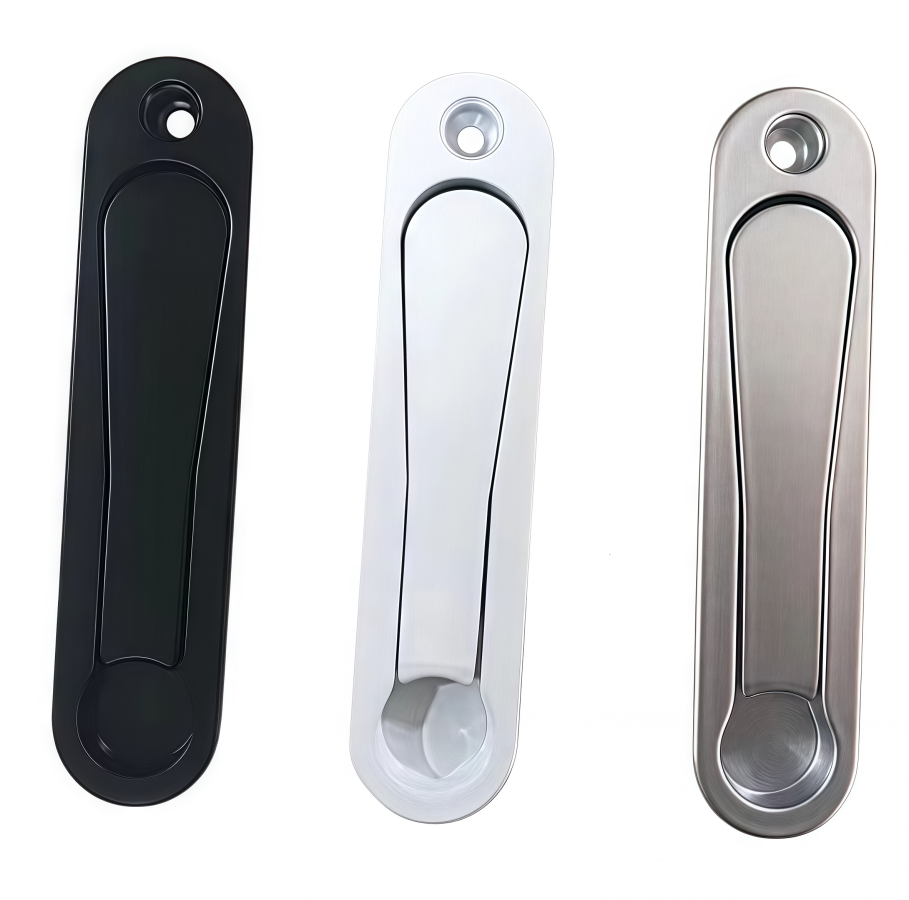
Predominantly used on sliding window systems, the recessed pull (or flush handle) is embedded into a precise cutout in the sash rail. Because it does not protrude, it completely prevents hardware interference when sliding panels overlap, and it will never snag on fly screens or curtains. These typically integrate a discrete latch or bump lock mechanism.
Not all handles are created equal. When evaluating window hardware, look beneath the surface at these two critical engineering factors:
Selecting the right window hardware elevates both form and function. Connect with A-OK Hardware today to specify premium window handles for your next architectural project.


Let's get in touch.
Privacy statement: Your privacy is very important to Us. Our company promises not to disclose your personal information to any external company with out your explicit permission.
Fill in more information so that we can get in touch with you faster
Privacy statement: Your privacy is very important to Us. Our company promises not to disclose your personal information to any external company with out your explicit permission.